If your team still starts the day opening the same spreadsheet, copying data between two software tools, or chasing approval emails across departments, this article is for you. Manual processes are not just annoying. They are quietly bleeding your business dry. And a custom web application might be the single most practical fix you have not tried yet.
The Hidden Cost of Doing Things Manually
Let’s be honest—many businesses continue to rely on manual processes not because they’re the best option, but because they’re familiar. Spreadsheets that have been in use for over a decade, approval workflows passed through endless email chains, and employee-created workarounds become the norm. If things aren’t completely broken, why change them?
The problem is that what appears to be a functioning system is often a fragile one. A single employee leaving the organization can disrupt an entire workflow that only they understood. One incorrect value in a spreadsheet can result in costly financial errors weeks later. As workloads increase, bottlenecks in one department begin affecting the productivity of every other team. These inefficiencies build up gradually, making them easy to overlook until they begin impacting business performance in a significant way.
For small and mid-sized businesses, these hidden costs are even more damaging. Unlike large enterprises, SMEs have limited resources and cannot afford to lose valuable hours to repetitive tasks. Every minute spent manually entering data, generating reports, updating records, or searching for information is time that could have been invested in serving customers, driving innovation, or growing the business.
Research consistently highlights the impact of manual operations. Nearly 19% of employee work time is spent searching for information trapped in disconnected systems, while 40% of SMEs identify manual data entry as one of their leading sources of business errors. Organizations that automate their core workflows often experience up to three times faster turnaround for routine business processes. The cost of maintaining outdated systems is rarely zero—it simply becomes more expensive over time.
This is where custom web applications make a measurable difference. Instead of relying on disconnected spreadsheets and manual approvals, businesses can centralize operations, automate repetitive workflows, improve data accuracy, and provide real-time visibility across departments. While many organizations initially focus on the web app development cost in Bangalore, the more important consideration is the long-term return on investment. A well-designed web application can significantly reduce operational costs, improve employee productivity, and create a scalable foundation for future business growth.
What Web Application Development Actually Means for Your Business
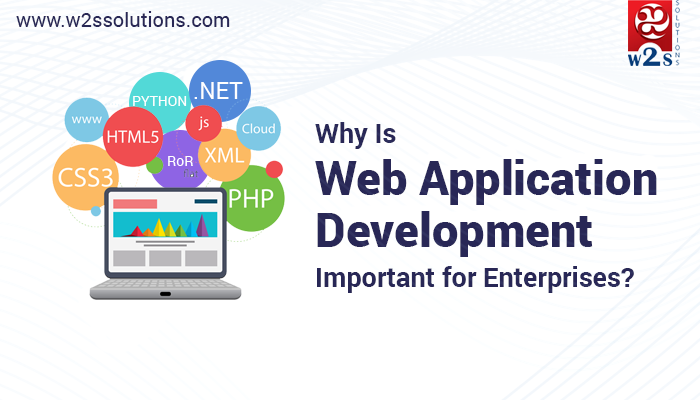
When someone in tech says web application development, it sounds a lot more complex than it needs to. At its core, it simply means building a piece of software that lives in a browser, that your team or your customers can use from anywhere, without installing anything.
Unlike a website, which primarily shares information, a web application does things. It processes data. It routes approvals. It generates invoices. It tracks inventory. It syncs with your existing tools. Think of it as custom software, built specifically for how your business actually works, not how some software vendor imagined a generic business might work.
This is the fundamental advantage of a custom web application over off-the-shelf tools: it is built around your processes, not the other way around. You stop adapting your team’s behaviour to fit a rigid tool. The tool adapts to you.
How to Tell If Your Business Needs a Web Application
Not every business needs to build custom software right away. Still, if several of these situations sound familiar, it’s probably time to start thinking about it.
- Your team is juggling important data in shared spreadsheets, and more than two people keep editing them.
- You’re still dealing with approvals or status updates through endless email chains and chat threads.
- You’re paying for different software tools that don’t talk to each other, so someone has to manually keep them in sync.
- Pulling together a simple report takes hours of copying and pasting, instead of a few quick clicks.
- New hires spend way too long learning the ropes because your process lives in someone’s head, not in any system.
- You’ve outgrown the tool that got you through the early days, but even thinking about replacing it feels overwhelming.
If you recognized yourself in at least three of these, a custom app isn’t just a “nice to have.” It’s what your business needs to actually run better.
Why Cloud-Based Apps Are a Game Changer
Cloud-based web applications have changed the landscape for smaller businesses wanting something custom. A while ago, building your own software meant setting up physical servers, hiring someone just to keep them running, dealing with backups, and hoping nothing crashed. That complexity forced a lot of businesses to stick with clunky off-the-shelf solutions.
Now, thanks to cloud hosting, your application sits on the infrastructure managed by giants like AWS, Google Cloud, or Azure. You only pay for what you use. When things get busy, the system automatically scales to handle it. When it’s quiet, it scales down. Everything is online, so your team can jump in whether they’re in Bangalore, meeting a client in Mumbai, or working remotely—no difference in access or experience.
For businesses spread out across cities or managing teams in different places, moving to the cloud isn’t just a technical update. It completely changes how everyone works together and stays in sync.
What Good Web Application Services Actually Look Like
Web application services are about much more than writing code. The difference between a web application that transforms your business and one that eventually becomes unused comes down to the quality of planning and strategic thinking that takes place before a single line of code is written.
A reliable development partner begins by understanding your business rather than focusing solely on technology. They take the time to learn about your workflows, operational challenges, business objectives, and the people who will use the application every day. Only after gaining this understanding should they recommend the right technology stack, architecture, and development approach.
This business-first mindset is one of the key qualities shared by the top Web App Development Companies in Bangalore for Growing Businesses. Instead of delivering generic software, they build custom web applications that streamline operations, improve productivity, enhance user experiences, and support long-term business growth. By aligning technology with your strategic goals, they ensure your investment delivers measurable value rather than simply adding another tool to your technology ecosystem.
Here is what a good engagement typically looks like from start to finish:
- Discovery and process mapping: Before building anything, a good team maps your current workflows, identifies the friction points, and scopes the solution that actually solves the right problem.
- Prototype and validate early: A clickable prototype shared with your actual users before development begins prevents costly mistakes later. It is far cheaper to change a wireframe than to rebuild a feature.
- Phased delivery: Delivering in phases means your team starts seeing value faster, and feedback from real use informs what gets built next.
- Training and handover: The app is only as useful as the people using it confidently. Good service includes making sure your team is fully set up before the vendor steps back.
- Ongoing support and iteration: Your business will evolve. The best partners build for maintainability from the start and stay available for the iterations that inevitably follow launch.
Thinking about web app development costs in Bangalore?
You’re in luck if your business is based here. You’re surrounded by a thriving tech scene. Developers in Bangalore charge less than what you’d find in Western countries, and you don’t have to give up quality.
And let’s get real, the price tag depends on what you want.
But honestly, the real question isn’t “What does it cost?” It’s “How much does NOT having it cost?”
Picture this: your team wastes 200 hours every month doing manual work. If each hour costs Rs. 600, you’re bleeding Rs. 1.2 lakh a month in hidden expenses. If you invest Rs. 10 lakh in a web app, it pays for itself in less than a year. After that, the savings keep rolling in month after month.
When to Bring in a Technology Consulting Company
There is a specific kind of mistake that businesses make when they decide to build something: they jump to solutions before properly understanding the problem. They hire developers, describe the current messy process, and ask for it to be digitised. What they get back is a digital version of the same messy process, now with a login screen.
This is where working with a technology consulting company makes a real difference. A consultant’s job is to ask inconvenient questions. Why does this step exist? Could this whole approval chain be simplified? Are you solving the right problem? What are the downstream systems this needs to talk to? How will this scale in two years?
A good technology consulting partner helps you with three things before a single developer is engaged. First, they audit the existing process objectively and identify where the real friction is sitting. Second, they help you define what success looks like in concrete, measurable terms. Third, they scope the solution in a way that balances what you need now with what you will need later, so you are not rebuilding from scratch in two years.
For SMEs especially, this upfront consulting phase is often the difference between a project that delivers genuine ROI and one that ends up as a cautionary story about why the software thing did not work.
How to Get Started Without Overwhelming Your Team
One thing that stops businesses from taking this step is the assumption that building software means a massive multi-year project that disrupts everything. It does not have to be. The best approach for most businesses is to start very small and deliberately.
Pick one process. The most painful one, the one your team complains about most, the one that causes the most errors or takes the most time. Build a solution for just that process. Get it running. Let the team use it for 60 to 90 days. Measure the impact. Then decide what to build next.
This approach does three useful things at once. It limits risk. It gives your team a win early, which builds internal momentum for the broader digital transformation. And it produces real data about return on investment, which makes the business case for the next phase much easier to make internally.
The goal is not to boil the ocean in month one. It is to get one thing working well, learn from it, and build from there. Most meaningful operational improvements at the business level happen exactly this way: iteratively, with real feedback at every step.
Ready to Build Something That Actually Works for Your Business?
At W2S Solutions, we help enterprises and SMEs replace manual processes with custom web applications built around how your business actually operates. From the first discovery call to post-launch support, we work with you at every step.
Whether you are starting with a small internal tool or planning a full-scale platform, our team brings the technical depth and business understanding to get it right.